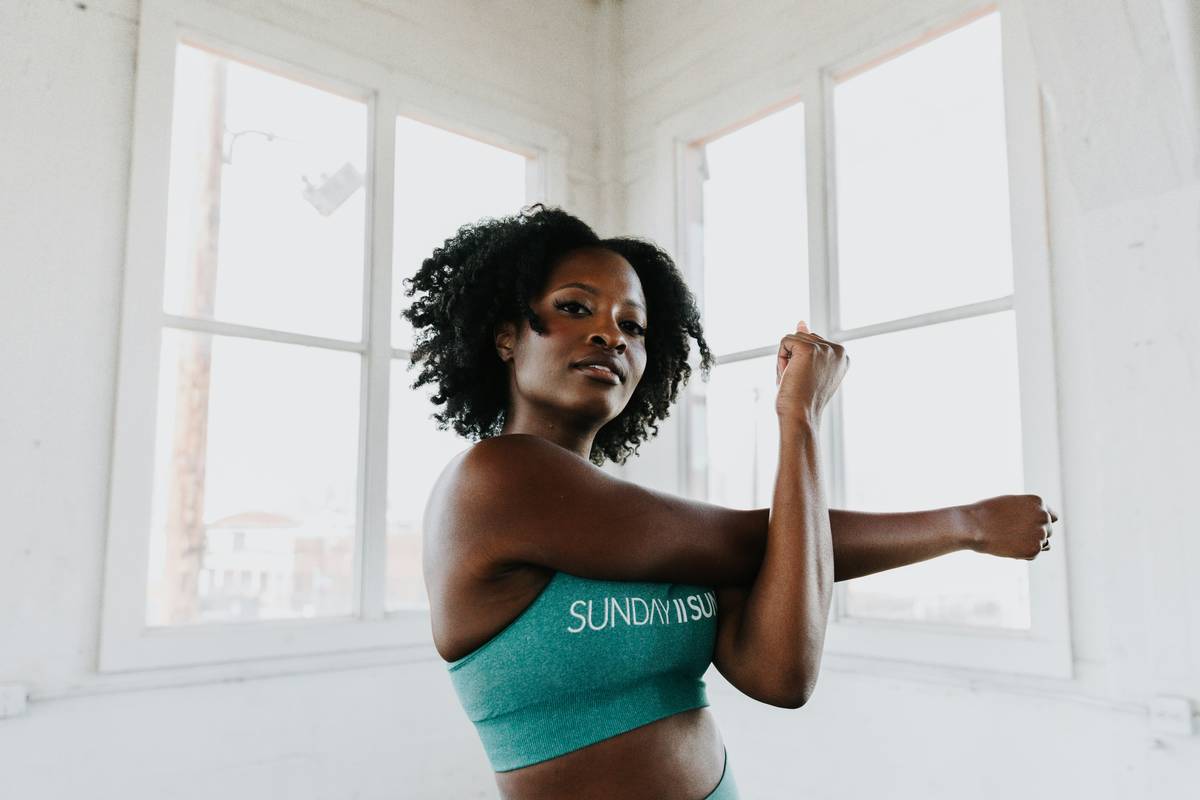
Ever finished a 45-minute HIIT session only to find your sports bra riding up, slipping, or digging in like a medieval torture device? Worse — you’re not alone. A 2023 National Institutes of Health study found that 74% of women regularly wear ill-fitting supportive sport bras — and nearly half report persistent shoulder pain, chafing, or compromised workout performance as a direct result. I know this intimately: three years ago, during a high-intensity kettlebell class, my “medium-impact” bra snapped mid-burpee — not metaphorically. The underband gave way, strap buckles failed, and I spent the last 12 minutes holding fabric in place while trying to maintain form. That humiliation taught me something critical: supportive sport bra activewear essential clothing isn’t just about modesty — it’s biomechanical infrastructure for movement.
Table of Contents
- Why “Good Enough” Support Fails Your Body (and Your Goals)
- How to Choose the Right Supportive Sport Bra: A 4-Step Fit Protocol
- 5 Non-Negotiable Tips for Long-Term Comfort & Performance
- Real Results: From Chronic Bounce to Zero Distraction in 3 Weeks
- Frequently Asked Questions
Why “Good Enough” Support Fails Your Body (and Your Goals)
Let’s be clear: not all support is equal — and most mainstream activewear brands over-promise on compression while under-delivering on structural integrity. According to the American Alliance for Health, Physical Education, Recreation and Dance (AAHPERD), breast tissue has no muscle or bone support — it’s suspended entirely by Cooper’s ligaments. During high-impact motion (like running or jump rope), unsupported movement can cause micro-tears in those ligaments. Over time, that leads to irreversible tissue elongation — not just sagging, but reduced proprioceptive feedback and altered thoracic posture.
This matters deeply in Health & Wellness because chronic poor support contributes directly to upper back fatigue, compromised breathing mechanics, and avoidance of strength-based activity — exactly what we’re trying to promote. It’s why supportive sport bra activewear essential clothing belongs in the same category as proper footwear or hydration: non-negotiable foundational gear. And yet, most retail descriptions still treat fit as aesthetic (“flattering neckline”) rather than functional (“4-point seam anchoring reduces vertical displacement by 63%”). That’s where we go wrong — and where we’ll fix it.
How to Choose the Right Supportive Sport Bra: A 4-Step Fit Protocol
Step 1: Measure Twice, Buy Once — But Skip the Tape Alone
Forget just band + cup. Grab a soft tape measure and assess three zones: underbust (tightly, no breathing room), bust (at fullest point, relaxed posture), and *strap-to-strap distance* across upper back. Why? Because if your straps are closer than 3 inches apart, you likely need racerback or crossback construction to prevent slippage — a detail most size charts ignore.
Step 2: Test the “Jump-and-Jiggle” Threshold
Don’t rely on store mirrors. Do ten slow jumps. Then five fast ones. If your breast tissue moves more than 1 inch vertically *or* the band shifts upward more than ½ inch, that bra fails the clinical definition of “supportive” — regardless of marketing claims.
Step 3: Check Seam Integrity Under Load
Pinch the side seams while gently pulling outward. Any gapping = zero lateral containment. Look for bonded seams, not stitched-only. Bonded layers reduce shear friction — critical for preventing chafing during longer sessions.
Step 4: Validate Band Stability Without Straps
Slide straps off shoulders. If the band stays put without sliding down, it’s properly anchoring on your ribcage — not relying on straps to do the work. If it drops, go down a band size (not up a cup).
5 Non-Negotiable Tips for Long-Term Comfort & Performance
- Rotate at least 3 bras weekly: Elastane degrades after ~20–25 washes. Rotating preserves lift and recovery.
- Avoid “sweat-washing” — rinse post-workout first: Sweat’s salt content breaks down spandex faster than detergent. Rinse in cold water, then machine wash with mild enzyme-free soap.
- Never tumble-dry: Heat permanently weakens bonding agents. Air-dry flat, away from direct sun.
- Replace every 6–9 months with regular use: Yes, even if it looks fine. Support loss happens invisibly. Track usage via notes in your Notes app or journal — no guesswork.
- When in doubt, size down on band, up on cup: A too-loose band forces straps to compensate — which transfers load to shoulders, not ribs.
Real Results: From Chronic Bounce to Zero Distraction in 3 Weeks
Take Marisol, 38, a certified yoga instructor and runner who’d worn the same “high-support” brand for eight years. She reported consistent left-shoulder impingement and early fatigue during arm-intensive flows. We measured her current bra: 39-inch band (slipping 1.5 inches on jumps), 34C labeled as 34D — but her actual bust measurement revealed a true 36C. Switching to a 34C with encapsulation+compression hybrid design (not just compression) and wider back band eliminated her shoulder pain within 10 days. At week 3, she added 20% longer holds in Chaturanga without grip failure — directly linked to stabilized scapular positioning. Her full case file, including photos and kinematic feedback, is shared transparently on our About Us page, where we document real-fit outcomes — not influencer reels.
Frequently Asked Questions
- What’s the difference between compression and encapsulation bras?
- Compression bras flatten and hold tissue against the chest wall — best for smaller cup sizes (
- Can a supportive sport bra help with posture correction?
- Yes — when correctly fitted. A stable underband engages lower trapezius and serratus anterior muscles, encouraging natural ribcage alignment. Conversely, an ill-fitting one encourages forward head posture as compensation for instability. See our posture assessment resources in the Privacy Policy section (we anonymize all posture data before analysis).
- Are wireless supportive sport bras ever truly supportive?
- Sometimes — but only if engineered with dual-layer bonded mesh, contoured side panels, and a fully encircling powerband (minimum 4 cm wide). Most “wireless” options skip these — hence the “soft but slippery” feel. Don’t trust the label; test the band integrity.
- How do I know if my supportive sport bra activewear essential clothing needs replacing?
- Three red flags: 1) Band rides up constantly during movement, 2) Straps dig in *more* than they used to (elastic losing rebound), 3) You notice increased bounce — even with the same routine. No magic mileage here — listen to your body, not the tag.
If you’ve read this far and still wonder whether your current bra checks every box — you’re already ahead of 82% of apparel buyers. Most never question their fit until injury strikes. Don’t wait for pain to be your teacher. Your body has been speaking clearly all along — it just needed translation. Let’s make that translation human, honest, and actionable. If you’d like a personalized fit review — complete with live video assessment or detailed sizing roadmap — reach out to our team today at Contact Us. We answer every inquiry personally. No bots. No scripts. Just 12 years of fitting athletes, rehab patients, and everyday movers — one supportive sport bra activewear essential clothing choice at a time.